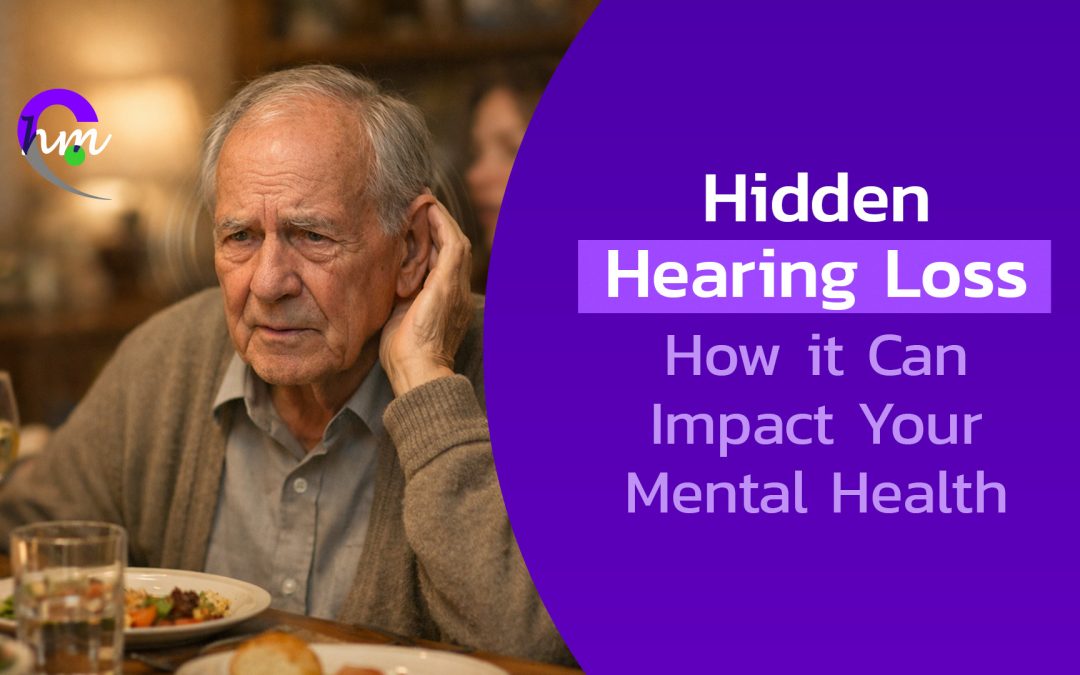
If you’ve ever found yourself feeling unusually tired, frustrated, or socially withdrawn without knowing why, the cause could be hidden hearing loss. So, what is hidden hearing loss, and how does it affect your mental health? Hidden hearing loss occurs when the brain struggles to process sound, even when a hearing test appears normal. Over time, this can lead to mental fatigue, anxiety, social isolation, and other emotional impacts especially if left unaddressed. Here’s how hidden hearing loss could be affecting your wellbeing and what to do about it.
What Is Hidden Hearing Loss?
Hidden hearing loss is a form of hearing difficulty that doesn’t show up on standard audiograms or traditional hearing tests. People with hidden hearing loss often have normal test results but still struggle to hear clearly particularly in noisy environments or group conversations. Unlike more easily diagnosed types of hearing loss like conductive or sensorineural loss, hidden hearing loss affects how the brain processes sound, not just how the ear receives it. This makes it harder to identify and treat, especially without specialist support.
Hidden Hearing Loss and Mental Health: What’s the Link?
Because hidden hearing loss can go undetected for years, many people don’t realise it’s contributing to mental and emotional challenges.
It can affect mental health in several ways:
- Listening fatigue – Your brain works overtime to fill in the blanks, leaving you mentally drained
- Social withdrawal – You may avoid social situations where hearing is difficult
- Increased stress or anxiety – Struggling to hear in public settings can lead to frustration and self-consciousness
- Mood changes – Ongoing challenges with communication can contribute to low mood or irritability
When you’re dealing with hidden hearing loss but aren’t aware of it, these mental health impacts can build quietly over time.
Subtle Signs to Watch For
It’s not always easy to recognise hidden hearing loss. Here are a few signs that may suggest it’s time to seek support:
- You struggle to follow conversations in noisy environments
- You feel mentally exhausted after socialising
- You often mishear words or ask others to repeat themselves
- Friends or family comment on your hearing, but you pass standard tests
- You feel more anxious or frustrated in social settings than you used to
If you’re noticing these patterns, it’s worth considering that hidden hearing loss could be a contributing factor especially if your hearing “seems fine” on the surface.
Why Many People Delay Getting Help
Unfortunately, many people delay seeking help for hearing issues especially when tests come back normal or symptoms are subtle. This often leads to unnecessary strain on mental and emotional wellbeing.
Want to learn more about how the brain is affected by hidden hearing loss? This article from Harvard Medical School explores how hidden hearing loss impacts brain function and listening fatigue.
Even if your hearing appears “normal”, your brain might be working much harder than it should and that’s where the emotional toll begins.
What You Can Do About Hidden Hearing Loss
At Hearing Matters, we understand that not all hearing problems show up on a chart. That’s why we offer a free hearing aid evaluation across our clinics in South Australia to help you explore whether you may benefit from hearing support.
This is not a diagnostic hearing test, but rather a supportive consultation with one of our qualified audiologists. You’ll have the opportunity to:
- Discuss your hearing concerns
- Trial a hearing aid in real-world settings
- Learn how hearing aids might reduce mental fatigue and improve clarity
- Receive guidance on next steps, including full testing if required
How Hearing Aids Can Help with Mental Wellbeing
Many people assume hearing aids are only for severe hearing loss but even for hidden hearing loss, the right device can offer relief. By reducing the effort required to process sound, hearing aids can:
- Lower mental fatigue
- Improve concentration and communication
- Increase confidence in social situations
- Support emotional balance and quality of life
That’s why taking the first step, even just a conversation, can make a real difference.
The Role of Early Support
Just like with any other health concern, the earlier you seek support for hidden hearing loss, the better the outcomes tend to be both for your hearing and your mental wellbeing. If you’re unsure, it costs nothing to explore your options.
Our team at Hearing Matters is here to guide you without pressure. We believe hearing support should be accessible, compassionate, and tailored to your individual needs.
Take the First Step Today
If you’ve been feeling mentally drained, socially distant, or unsure about your hearing, hidden hearing loss could be the missing link. A free hearing aid evaluation at Hearing Matters is a risk-free way to learn more, trial a device, and take proactive steps toward clearer communication and better emotional health.
👉 Book your free hearing aid evaluation today at one of our clinics and give your ears (and your mind) a break.