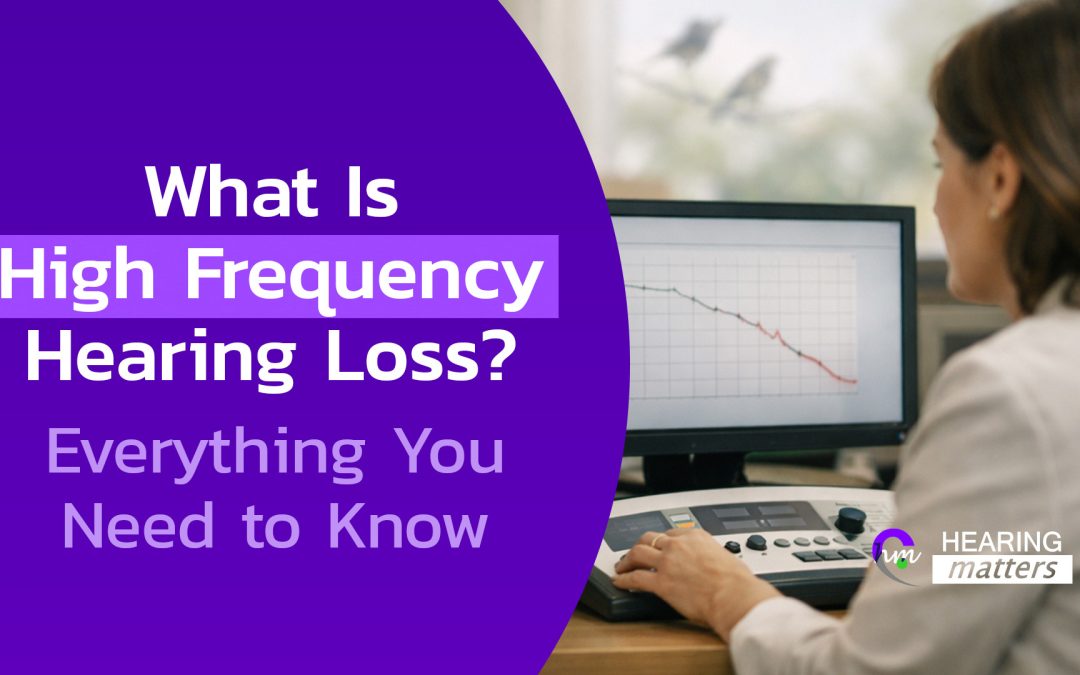
If you’ve ever struggled to hear conversations in noisy environments or noticed that certain sounds seem “muffled” or missing, you might be experiencing high frequency hearing loss. So, what is high frequency hearing loss, and how does it affect your daily life? It’s a common type of hearing loss that makes it harder to hear high-pitched sounds like birdsong, alarms, or certain speech sounds, even when everything else seems normal. Left unmanaged, it can impact communication, confidence, and social connection.
In this article, we’ll explain what high frequency hearing loss is, how it’s diagnosed, and what you can do about it.
What Is High Frequency Hearing Loss?
High frequency hearing loss affects your ability to hear sounds at higher pitches, typically above 2,000 Hz. This includes common speech sounds like “s,” “f,” “th,” and “sh”, as well as higher voices, beeping alarms, birdsong, and background details in music.
This type of hearing loss is usually sensorineural, meaning it stems from damage to the inner ear or auditory nerve. It’s one of the most common types of hearing loss, especially in older adults or those exposed to loud noise over time.
How High Frequency Hearing Loss Affects Daily Life
The effects of high frequency hearing loss can be subtle at first and many people don’t notice them right away. You may still hear plenty of sounds, but your brain is missing crucial parts of speech that help you understand meaning.
As a result, you might:
- Struggle to hear in group settings or noisy places
- Feel like people are mumbling or not speaking clearly
- Miss out on warning sounds like alarms or doorbells
- Turn the TV volume up higher without realising it
- Avoid conversations because they feel mentally draining
In social situations, this can lead to frustration, embarrassment, and withdrawal, especially when the loss is mild and others don’t notice it. That’s why this type of hearing loss is often underdiagnosed or ignored until it becomes more severe.
For more on why gradual hearing loss often goes unnoticed, this article from Johns Hopkins Medicine explains how and why it happens.
What Causes High Frequency Hearing Loss?
There are several common causes of high frequency hearing loss, including:
- Ageing (presbycusis) – A natural part of getting older
- Noise exposure – Jobs in construction, music, or factories (see: industrial hearing loss)
- Ototoxic medications – Some antibiotics and chemotherapy drugs
- Genetics – A family history of hearing loss
- Medical conditions – Including diabetes and cardiovascular disease
Over time, these factors can damage the delicate hair cells in your inner ear that are responsible for processing high-pitched sounds.
How Is It Diagnosed?
A hearing loss test (audiogram) is the most accurate way to determine if you have high frequency hearing loss. During the test, different sound frequencies are played through headphones, and you indicate which ones you can hear. However, because this type of hearing loss often starts gradually, many people delay getting tested especially if they can still hear lower-pitched sounds clearly.
At Hearing Matters, we offer a free hearing aid evaluation for anyone unsure whether they might benefit from hearing support. While not a full diagnostic test, it’s a great first step to explore whether hearing aids could help with high frequency loss.
Can Hearing Aids Help with High Frequency Hearing Loss?
Yes, modern hearing aids are specifically designed to support people with high frequency hearing loss.
Advanced models can:
- Amplify higher-pitched sounds without making everything louder
- Improve clarity in conversations
- Reduce background noise
- Make speech more natural and less mentally exhausting
These features can dramatically improve your quality of life, especially in social settings or noisy environments. And with a free hearing aid evaluation, you can test how they work in real life at no cost and with no pressure to commit.
Why Early Support Matters
The earlier you address high frequency hearing loss, the easier it is to adapt to treatment and maintain your communication skills. Untreated hearing loss can lead to social withdrawal, emotional strain, and even cognitive changes over time. If you’re noticing signs, even mild ones, it’s worth having a conversation with a hearing professional.
Take the First Step with Hearing Matters
If you’re finding speech unclear, feeling frustrated in noisy places, or suspect you may have high frequency hearing loss, don’t wait. Hearing Matters offers free hearing aid evaluations across South Australia to help you explore your options in a relaxed, pressure-free setting.
👉 Book your free hearing aid evaluation today and take the first step toward clearer hearing and more confident conversations.