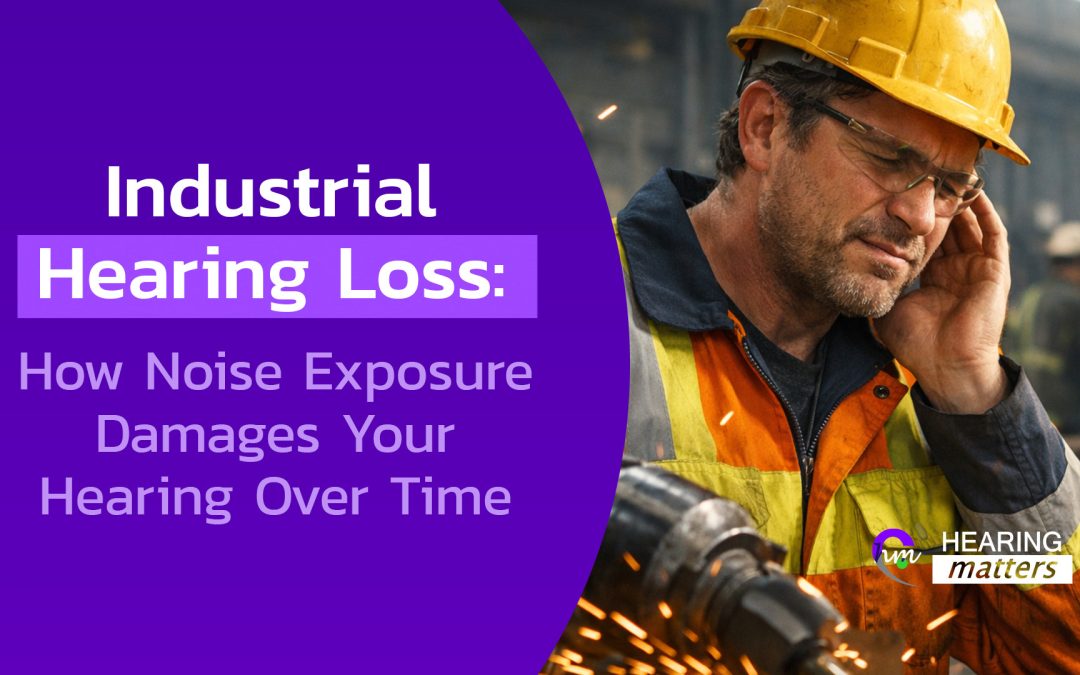
If you work in construction, mining, manufacturing or any noisy environment, you may be wondering: what is industrial hearing loss and how does it happen? Industrial hearing loss occurs when repeated exposure to loud workplace noise gradually damages the inner ear. It often develops slowly over years, making it easy to ignore until communication becomes difficult. The damage is usually permanent, but it is preventable and manageable with the right support.
Understanding how industrial hearing loss develops is the first step toward protecting your long-term hearing health.
What Is Industrial Hearing Loss?
Industrial hearing loss refers to hearing damage caused by ongoing exposure to loud noise in the workplace. It is a form of noise-induced hearing loss and most commonly affects people working around:
- Heavy machinery
- Power tools
- Mining equipment
- Farming machinery
- Factories and manufacturing plants
In many cases, industrial hearing loss presents as high frequency hearing loss, meaning higher-pitched sounds such as speech consonants, alarms, or warning signals become harder to hear. Because this damage occurs gradually, many workers don’t notice the change straight away.
How Does Noise Cause Permanent Damage?
Inside your inner ear are tiny hair cells responsible for detecting sound vibrations. When exposed to excessive noise over time, these hair cells become damaged or die. Unlike other cells in the body, they do not regenerate.
Repeated exposure to unsafe noise levels can result in permanent hearing damage. According to the World Health Organization, prolonged exposure to loud sounds above recommended limits significantly increases the risk of irreversible hearing loss. You can read more about safe listening guidelines on their article here: Deafness and hearing loss: Safe listening
Even sounds that don’t feel painfully loud can cause long-term harm if exposure is frequent and prolonged.
Early Signs of Industrial Hearing Loss
One of the challenges with industrial hearing loss is that the early signs are subtle. You may notice:
- Difficulty hearing speech clearly, especially in noisy environments
- Frequently asking others to repeat themselves
- Ringing in the ears (tinnitus) after work
- Turning the TV volume up higher than others prefer
- Struggling to hear high-pitched sounds
Over time, this can progress into more noticeable hearing difficulties. Many cases are diagnosed during a routine hearing loss test, often when the damage has already occurred.
Types of Hearing Loss Linked to Workplace Noise
There are several types of hearing loss, but workplace noise typically causes sensorineural hearing loss. When people search for sensorineural hearing loss versus conductive hearing loss, they are often trying to understand whether their condition is permanent.
Sensorineural hearing loss, which includes most cases of industrial hearing loss, usually cannot be reversed medically. However, it can be effectively managed. On an audiogram, noise damage often appears as a drop in higher frequencies, consistent with high frequency hearing loss.
Why Hearing Protection Matters
The good news is that industrial hearing loss is largely preventable. Using proper hearing protection such as earplugs or earmuffs can significantly reduce the risk of long-term damage. Employers in many industries are required to provide protection where noise exceeds safe levels.
However, even with protective measures in place, damage can still occur, especially if protection isn’t worn consistently or correctly. Regular monitoring through a professional hearing loss test is essential for anyone regularly exposed to loud noise.
What Happens If Industrial Hearing Loss Is Ignored?
Ignoring early symptoms can lead to:
- Ongoing communication difficulties
- Increased listening fatigue
- Social withdrawal
- Safety risks in the workplace
- Reduced quality of life
Because the condition progresses gradually, many people adapt without realising how much hearing they’ve lost. Seeking advice early allows you to understand your options and take proactive steps.
How Industrial Hearing Loss Is Managed
While the damage itself cannot usually be reversed, it can be managed effectively. Modern hearing aids are specifically programmed to address the frequencies most affected by industrial hearing loss. They can:
- Improve speech clarity
- Reduce listening strain
- Enhance workplace safety
- Support better communication at home
At Hearing Matters, we offer a free hearing aid evaluation across South Australia. This allows you to:
- Discuss your work history and noise exposure
- Review your hearing results
- Trial hearing aids in real-world environments
- Explore options without pressure
The goal is not simply amplification but tailored support based on your individual hearing profile.
Protecting Your Hearing for the Future
Even if you’ve already experienced some degree of industrial hearing loss, protecting your remaining hearing is crucial.
This includes:
- Wearing hearing protection consistently
- Limiting exposure where possible
- Monitoring changes with regular hearing checks
- Seeking advice if you notice new symptoms
Early awareness can make a significant difference in long-term outcomes.
Take the Next Step with Hearing Matters
If you work in a noisy industry and are concerned about industrial hearing loss, now is the time to take action. Even mild changes can have a meaningful impact on communication and quality of life.
Hearing Matters has clinics all across South Australia and provides professional, personalised care tailored to your needs. 👉 Book your free hearing aid evaluation today with Hearing Matters and take control of your hearing health.