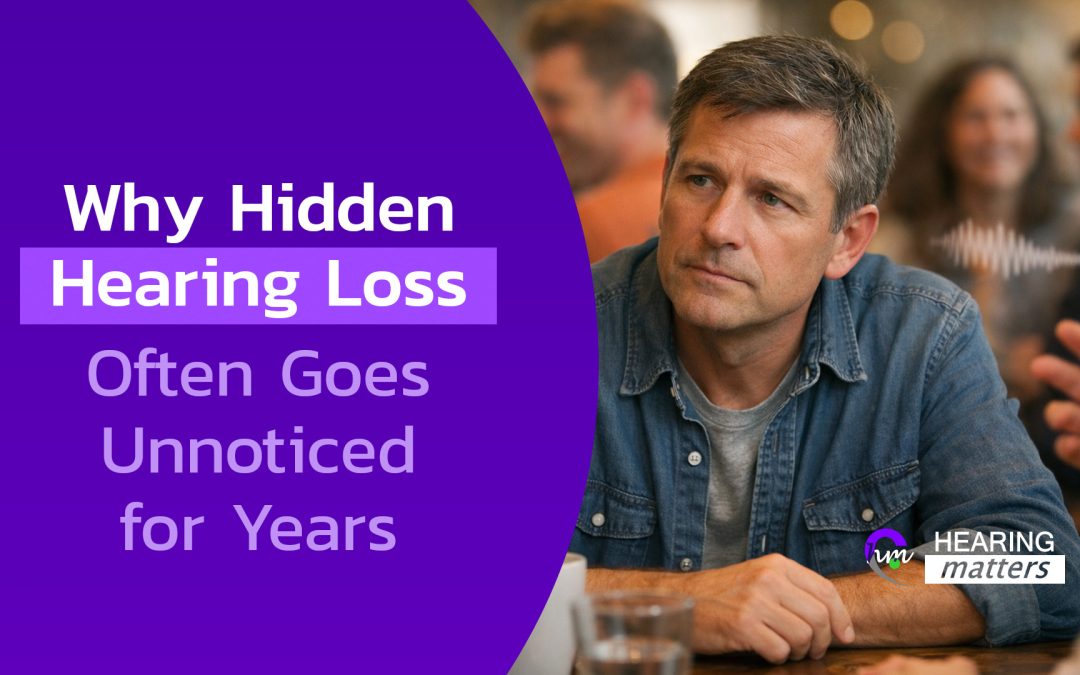
Many people are surprised to learn that hidden hearing loss can develop slowly and remain unnoticed for years. So why does this happen? Hidden hearing loss often goes unnoticed because it develops gradually, allowing the brain and lifestyle habits to adapt over time. People may assume others are mumbling or that background noise is the problem, rather than recognising early hearing changes.
Understanding why hidden hearing loss can go undetected is important, because early awareness makes it easier to seek support and protect long-term hearing health.
What Is Hidden Hearing Loss?
Hidden hearing loss refers to hearing difficulties that are not always obvious during everyday life, especially in the early stages. Many people with early hearing changes still hear certain sounds clearly, but struggle to understand speech in noisy environments.
For example, someone may notice they have difficulty following conversations in busy restaurants or meetings, yet they can still hear sounds like doorbells, alarms or music. Because these changes happen gradually, they are often dismissed as normal ageing or temporary distractions.
In many cases, hidden hearing loss is linked to high frequency hearing loss, which affects the ability to hear higher-pitched speech sounds like “s”, “f”, and “th”. These sounds are essential for understanding words clearly, so losing them can make conversations sound muffled or unclear.
Subheading: Why Hidden Hearing Loss Is Easy to Miss
One of the main reasons hidden hearing loss goes unnoticed is that the brain gradually adapts to the changes in hearing ability. When hearing declines slowly, the brain learns to compensate by relying more heavily on context, lip-reading, and familiar voices. This adaptation can mask the early warning signs of hearing loss.
People often develop habits such as:
- Turning the television volume up slightly
- Asking others to repeat themselves occasionally
- Avoiding noisy environments
- Blaming background noise for communication difficulties
Because these adjustments happen gradually, many people do not realise their hearing has changed until communication becomes significantly more difficult.
Research also suggests that hearing loss can affect how the brain processes sound over time. Harvard Medical School explains it in this article on how hearing loss may influence brain function and cognitive health.
Different Types of Hearing Loss
There are several types of hearing loss, and each can develop differently.
Sensorineural Hearing Loss: This is the most common form of hearing loss and occurs when the inner ear or auditory nerve becomes damaged. It often develops gradually and is commonly associated with ageing or long-term noise exposure.
Conductive Hearing Loss: This occurs when sound cannot pass efficiently through the outer or middle ear. Causes may include earwax build-up, infections, or structural problems.
Understanding the difference between sensorineural hearing loss versus conductive hearing loss helps hearing professionals determine the best approach to treatment or management.
Everyday Signs That Are Easy to Overlook
Because hidden hearing loss develops gradually, the early symptoms can be subtle. Some of the most common signs include:
- Difficulty hearing conversations in noisy environments
- Frequently asking people to repeat themselves
- Feeling tired after long conversations
- Turning the TV or radio up louder than others prefer
- Struggling to follow group discussions
These changes often happen so slowly that people simply adjust their habits without realising their hearing has changed.
Noise Exposure Can Contribute
Long-term noise exposure is another factor that can contribute to gradual hearing changes.
People working in loud environments or regularly exposed to loud sounds may experience industrial hearing loss, which can develop slowly over time. Even recreational noise exposure, such as concerts or loud headphones, may contribute to hearing damage.
Using proper hearing protection and monitoring noise exposure can help reduce the risk of long-term hearing damage.
When Should You Consider a Hearing Loss Test?
Because hidden hearing loss is difficult to recognise on your own, professional hearing assessments are important. A hearing loss test can measure how well you hear across different frequencies and volumes.
Regular hearing tests are especially important if you:
- Are over the age of 50
- Work in noisy environments
- Notice increasing difficulty understanding speech
- Experience ringing in the ears or listening fatigue
Early detection allows hearing professionals to recommend strategies that can improve communication and help maintain quality of life.
Why Early Awareness Matters
Many people wait years before seeking help for hearing changes. However, addressing hearing concerns earlier can make a significant difference.
Early support may help:
- Improve communication in social and professional settings
- Reduce listening fatigue
- Maintain cognitive engagement
- Protect long-term hearing health
Because hidden hearing loss develops gradually, recognising the signs early can help prevent unnecessary frustration or isolation.
Support from Hearing Matters
If you suspect you may be experiencing hidden hearing loss, speaking with a hearing professional can provide clarity and reassurance.
At Hearing Matters, experienced audiologists can assess your hearing and explain whether hearing changes may be affecting your ability to understand speech clearly. They also offer free hearing aid evaluations, allowing you to explore potential hearing solutions in a supportive and pressure-free environment.
Take the First Step Toward Better Hearing
If conversations have started to feel more difficult or you suspect changes in your hearing, it may be time to learn more about your hearing health.
Hearing Matters has clinics across South Australia and provides personalised hearing care designed to help you stay connected to the people and sounds around you.
👉 Book your free hearing aid evaluation today at Hearing Matters. Taking that first step can help you better understand your hearing and explore options to support clearer communication.