What Actually Happens During a Hearing Test?
If you are scheduled for a hearing test, you might be asking yourself: What does a hearing test actually involve? Painless and taking less than an hour to complete, hearing tests are very straightforward. A qualified audiologist will play a range of sounds and frequencies to make an assessment of your hearing. You will be walked through the whole process, no needles, and no discomfort.
It’s completely normal to feel nervous, many Australians put off getting tested because they don’t know what to expect. Let us put you at ease, and paint a clear picture of what a hearing test actually involves.
What to Expect From Hearing Tests
Before any testing begins, your audiologist will sit down and have a conversation with you. They’ll ask about your medical history, any medications you’re currently taking, and whether you’ve noticed specific changes, things like struggling to follow conversations in noisy environments, turning the television up louder than you used to, or regularly asking people to repeat themselves.
This isn’t an interrogation. It’s the context that helps your audiologist understand your situation before they start. A good appointment begins with listening, not just testing.
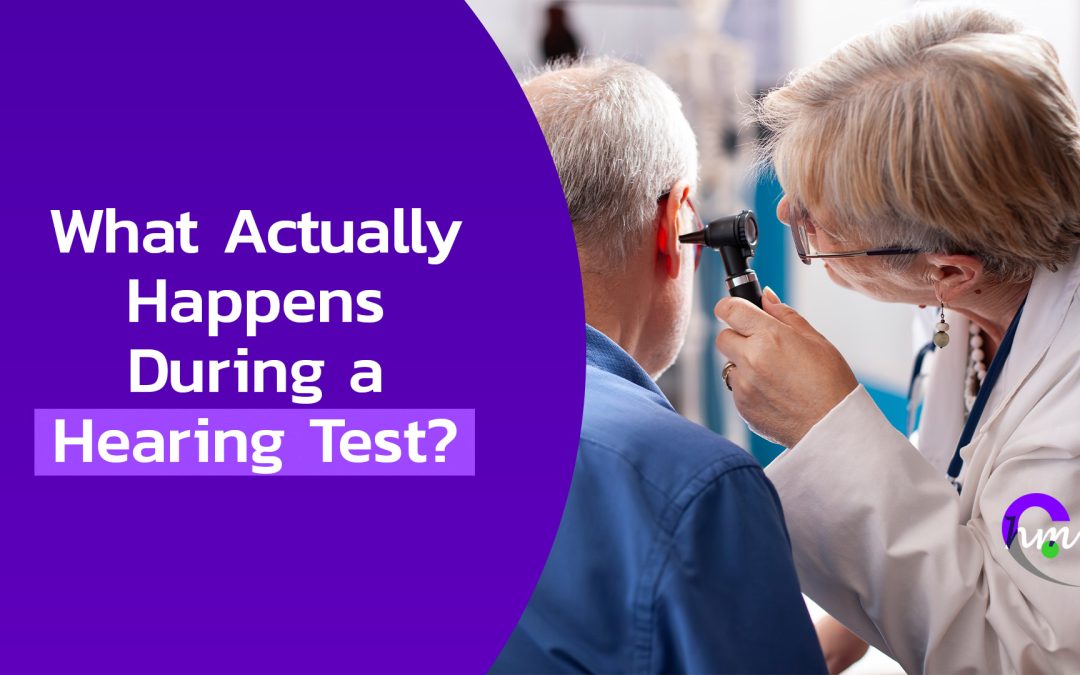
From there, they’ll carry out a quick physical examination using a small handheld instrument called an otoscope to look inside your ear canal. They’re checking for anything obvious, a build-up of wax, inflammation, or any structural issue that could be affecting how sound reaches your eardrum. It takes about a minute and is completely comfortable.
The Testing Process, Step by Step
The main part of hearing tests takes place in a soundproofed booth or a quiet, controlled room. You’ll put on a pair of headphones and listen to a series of tones at different pitches and volumes. Your only job is to press a button or raise your hand whenever you hear a sound even if it seems very faint. There’s no trick to it and no wrong answers.
This is called pure tone audiometry. It maps the softest sounds you’re able to hear across the full frequency range, and the results are recorded on a chart called an audiogram. Your audiologist will walk you through this at the end of the appointment.
Depending on your results and what you’ve described, a few additional checks may follow. Speech testing measures how clearly you understand spoken words at different volumes. Bone conduction testing places a small device behind the ear to check whether sound is travelling properly through the bones of your skull. Tympanometry assesses the health and movement of your eardrum.
None of these are uncomfortable, and most people are genuinely surprised by how simple the whole process is. If you’ve been wondering about the hearing test what to expect, the honest answer is: not much to worry about.
Understanding Your Results: Types of Hearing Loss
Once testing is complete, your audiologist will explain what your audiogram shows. If any loss is present, they’ll identify which of the main types of hearing loss applies and what that means for your day to day life.
There are three primary types of hearing loss. Conductive hearing loss happens when something is blocking or dampening sound before it reaches the inner ear, this could be wax, fluid, or a structural issue, and it’s often treatable. Sensorineural hearing loss involves damage to the inner ear or auditory nerve and is the most common form in adults, particularly as we age. Mixed hearing loss is a combination of both.
Knowing which type you’re dealing with shapes everything that follows, whether that means a simple procedure, hearing aids, monitoring over time, or a referral to a specialist. A good audiologist won’t hand you a chart and send you on your way. You’ll leave with a clear understanding of what your results mean and what your options are.
Why Regular Hearing Tests Are Worth It
Most people visit an audiologist for the first time when hearing loss is already well established. By that point, it’s often been developing quietly for years.
Hearing changes gradually, which makes it easy to miss. You start sitting closer to the television, or you avoid busy restaurants because they feel overwhelming. Do You find yourself nodding along in conversations you can’t quite follow? These adjustments happen so naturally that many people don’t recognise them as signs of a problem until someone else points it out.
Regular hearing tests give you a baseline and catch changes early — before they begin to affect your relationships, your confidence, or your quality of life. Australian guidelines generally recommend a hearing check every one to two years for adults over 50, and sooner if you’ve noticed any changes at all.
Looking For a Hearing Test Near You?
If you’ve been searching for a hearing test near me and aren’t sure where to start, the most important thing is to find qualified, independent audiologists professionals whose recommendations are based on your results, not on selling a particular product.
Hearing Matters provides comprehensive hearing assessments across Australia, carried out by experienced audiologists who take the time to explain what they find in language that actually makes sense. They also offer a free hearing test, so there’s no financial barrier standing between you and knowing where your hearing is at.
Whether you’ve noticed a change recently or simply haven’t had a check in a while, the information a hearing test gives you is genuinely valuable and the process itself is far easier than most people expect.
Book Your Free Hearing Test Today
There’s no downside to knowing where your hearing stands. Hearing tests are one of the simplest health checks you can have, and catching changes early makes a real difference to what’s possible down the track.
Book your free hearing test with Hearing Matters and walk away with a clear, honest picture of your hearing health and a plan if you need one.