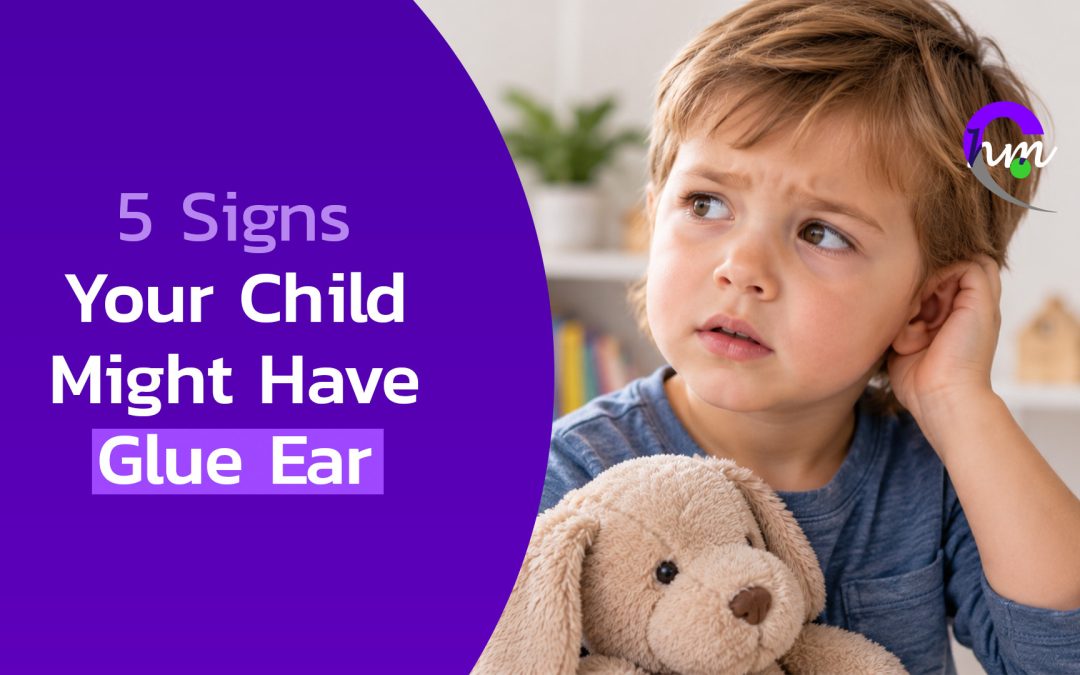
5 Signs Your Child Might Have Glue Ear
What is glue ear? Found commonly in children, glue ear is a condition where sticky fluid builds up behind the eardrum, muffling the way cotton wool would.
Also called otitis media with effusion, or just glued ear, many Australian children see an audiologist for this concern. It rarely causes pain, but if your child is struggling to hear or seems distracted lately, glue ear could be the reason.
What Is Glue Ear and What Causes It?
It develops when the Eustachian tube, the small passage that lets air into the middle ear and drains fluid away, becomes blocked. In young children this tube sits flatter and narrower than in adults, so it blocks more easily, particularly during winter when colds and sniffles are doing the rounds. Enlarged adenoids can add to the problem by pressing on the tube’s opening. For most kids the fluid, sometimes called ear glue because of how sticky it gets, clears on its own. For others it lingers for months or keeps coming back, which is when it is sometimes described as glue ears rather than a one off episode.
5 Signs Your Child Might Have Glue Ear
1. Tugging, rubbing or pointing at the ears. Even without complaining of actual pain, a child affected by this will often paw at or point to their ears, especially if it has followed a cold.
2. Turning up the volume, sitting closer, or asking “what?” often. Because the fluid buildup muffles sound rather than blocking it completely, kids often compensate without realising it, cranking up the TV or leaning in during conversations.
3. Speech that seems unclear, delayed or slow to develop. Hearing clearly is how young children learn to form words. If speech sounds mumbled, or your child watches your face closely instead of just listening, reduced hearing may be part of the picture.
4. Changes in behaviour or concentration. A child who suddenly seems frustrated, easily distracted at kinder or school, or who switches off during group conversations, may be struggling to hear properly rather than simply misbehaving.
5. Frequent colds, ear infections or occasional wobbliness. Since the middle ear also plays a role in balance, some children seem a little clumsier than usual on top of catching ear infections more often than their friends.
If more than one of these sounds familiar, it is well worth getting your child’s hearing checked properly rather than waiting to see if things improve on their own.
Getting a Diagnosis: What to Expect at an Appointment
If you suspect glue in ear based on the signs above, diagnosis usually starts with your GP having a look with an otoscope, then a referral to an audiologist for two quick, painless tests. Tympanometry measures how well the eardrum moves in response to gentle changes in air pressure, showing whether fluid is sitting behind it, while an audiometry hearing test checks how well your child hears different sounds and pitches. Neither test involves needles or discomfort, and results are usually available the same day.
Glue Ear Treatment: What Are Your Options?
The first step for most children is simply watching and waiting, since a large proportion of cases clear up by themselves within a few months. Your GP or audiologist may suggest checking back in around three months to see whether the fluid has resolved on its own.
Antibiotics, antihistamines and decongestants are generally not recommended, as the evidence shows they rarely make a real difference, though a nasal spray may be worth discussing if allergies seem to be triggering the buildup.
Is there a glue ear remedy you can try at home? Some children benefit from autoinflation, a technique using a special nasal balloon to help pop the ears open and encourage drainage, which an audiologist can show you how to use properly. If the fluid persists beyond about three months, particularly alongside noticeable hearing loss or speech delay, grommets, tiny tubes inserted during a short day surgery, are a well established option that drains the fluid and lets the middle ear breathe again while it heals.
Getting Clarity on Your Child’s Hearing
This is common, usually temporary and, in most cases, nothing to panic about. But because it can quietly affect a child’s listening, learning and confidence for months at a time, it is worth taking seriously rather than assuming they will simply grow out of it.
If any of these signs sound familiar, the team at Hearing Matters can carry out a thorough, child friendly hearing assessment and explain exactly what is going on, whether that means a bit more watching and waiting or a referral for further care. Book a hearing assessment with Hearing Matters today and get a clear answer instead of a guessing game.