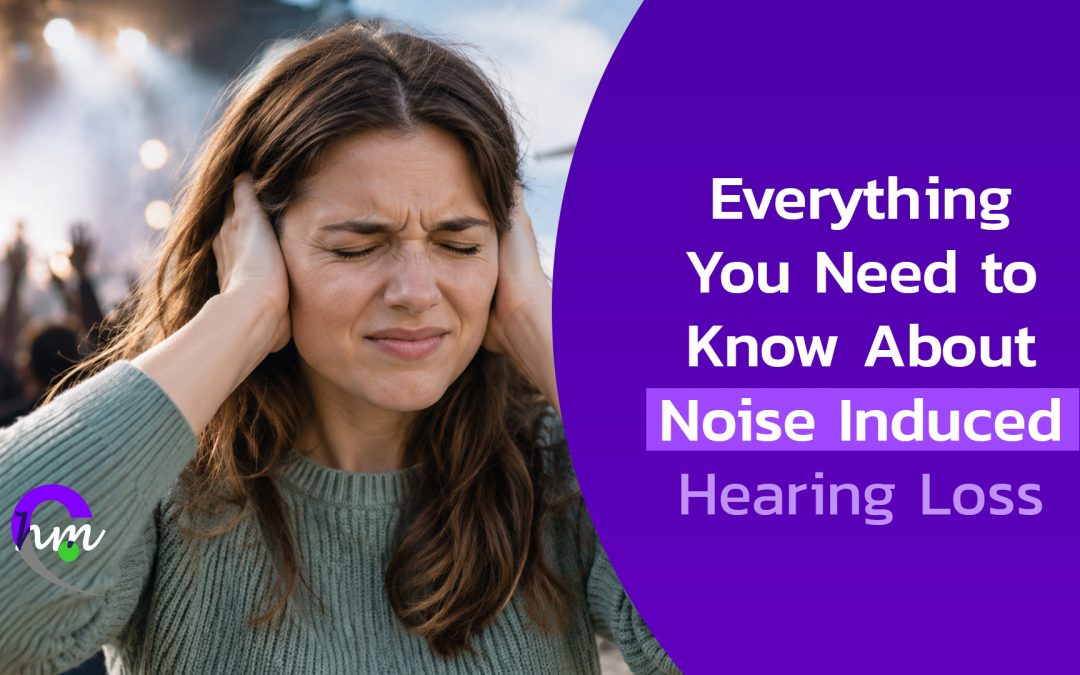
Everything You Need to Know About Noise Induced Hearing Loss
What is noise induced hearing loss? Noise induced hearing loss is when exposure to loud sounds causes permanent damage to your hearing. Whether that is a singular explosive bang, or years of persistent noise on the job.
Once you are aware of what to look out for, you can prevent this from happening. Here’s everything we know about noise induced hearing loss, and the signs to be aware of.
What Is Noise Induced Hearing Loss and How Does It Happen?
Loud sound damages the tiny hair cells inside the cochlea that convert sound into signals your brain can understand. Once these cells are destroyed, they do not grow back. Damage can happen instantly from something like a gunshot or explosion, known as acoustic trauma, or build up gradually over years from repeated exposure to machinery, power tools, loud music or traffic noise. In Australia, this everyday version is often called industrial deafness, particularly when it develops through years of workplace noise, and the symptoms of industrial deafness are identical to noise induced hearing loss more broadly.
Common Symptoms to Watch For
The early signs are easy to miss, since noise induced hearing loss typically affects high pitched sounds first, things like birdsong, doorbells or children’s voices, well before it affects everyday conversation. Other common signs include ringing or buzzing in the ears after a loud event, sounds seeming muffled for a day or two after a concert or shift on site, and gradually needing people to repeat themselves more often over the years. If you have noticed any of these, it is worth getting checked rather than assuming it will settle down on its own.
What dB Level Damages Hearing?
In Australia, workplace health and safety laws set a clear line: employers must keep noise exposure below 85 decibels averaged over an eight hour day, with a peak limit of 140 decibels at any single moment. So what level of decibels damage hearing in everyday terms? Every 3 decibel increase roughly doubles the risk to your hearing, which is why noise that seems only a little louder can be far more damaging than it sounds. As a rough guide, normal conversation sits around 60 decibels, a lawnmower or power tool around 90 to 100 decibels, and a loud concert or nightclub well above 100 decibels, all well past the point where hearing protection matters.
Have You Had Significant Exposure to Noise?
It is worth asking yourself honestly: have you had significant exposure to noise over the years, through a trade like construction, mining, manufacturing or farming, through music, motorsport or hobby shooting, or simply through years of headphones turned up loud on the commute? None of this means damage is guaranteed, but it does mean your hearing is worth checking sooner rather than later, especially if you have never had a baseline hearing test to compare future results against.
How Is It Diagnosed and Treated?
Diagnosis is straightforward. An audiologist will run a hearing test, look for the particular pattern of high frequency loss that noise damage tends to cause, and talk you through what your results mean. There is no cure that restores hearing cells once they are damaged, but that does not mean nothing can be done. Hearing aids can make a real difference to everyday listening and speech understanding, and for eligible workers and pensioners, government support through the Hearing Services Program can bring the cost down significantly. If your hearing loss developed through work, it is also worth having a proper conversation with your employer or a workplace advisor about your options, since work related hearing damage is taken seriously under Australian workplace law.
Protecting what hearing you have left matters just as much as treating what has already happened. Simple habits make a genuine difference: wearing proper hearing protection around loud machinery, giving your ears breaks during noisy activities, keeping headphone volume well below maximum, and following the general rule of moving away from or turning down anything you cannot comfortably talk over. Regular hearing checks are just as important as protection itself, since they catch changes early, well before they start affecting your day to day life.
Get Your Hearing Checked Properly
Noise induced hearing loss is common, largely preventable, and easy to overlook until it has already progressed. If you work in a noisy environment, spend time around loud music, or have simply noticed changes in your hearing, getting a proper baseline check gives you a clear picture rather than a guess.
The team at Hearing Matters can carry out a thorough, obligation free hearing assessment, explain exactly what your results mean, and talk you through practical ways to protect your hearing going forward. Book a hearing assessment with Hearing Matters today and take the guesswork out of your hearing health.