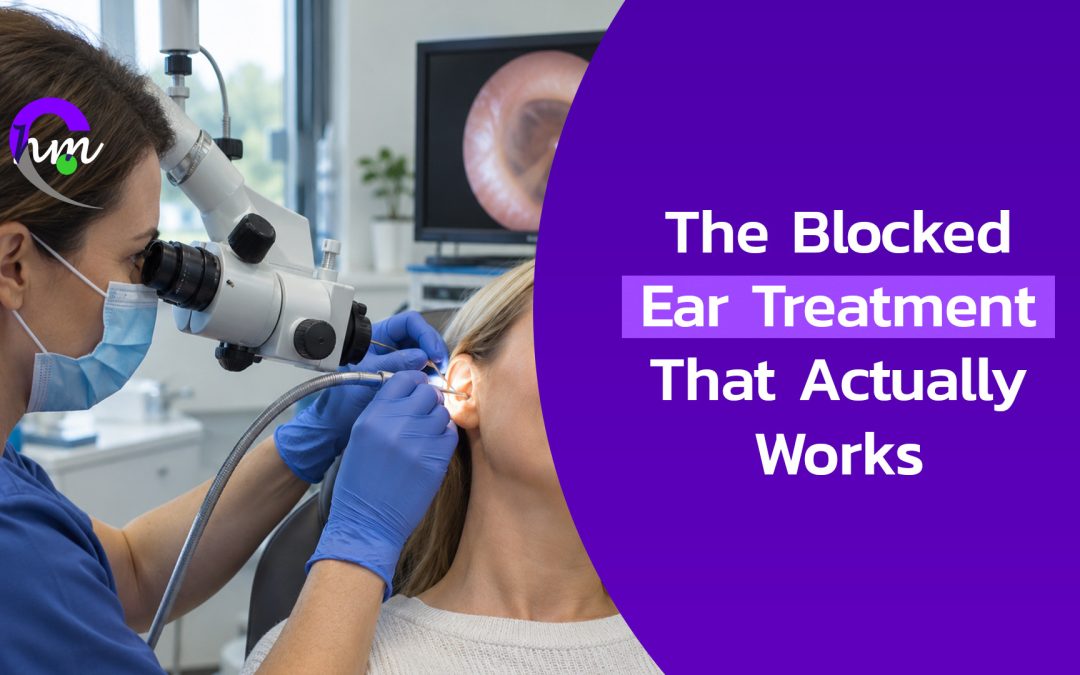
The Blocked Ear Treatment That Actually Works
What causes a blocked ear? It usually comes down to one of a few things: a buildup of ear wax, pressure changes affecting the Eustachian tube, or fluid sitting behind the eardrum after a cold or sinus infection.
The good news is that most cases are straightforward to sort out once you know the actual cause, rather than just waiting for it to clear on its own.
What Causes a Blocked Ear?
The most common culprit is ear wax, especially if you regularly use cotton buds, earphones, hearing aids or earplugs, since all of these interfere with your ear’s natural self cleaning process and can push wax further in rather than out. Some people also naturally produce more wax than others, or have narrower ear canals that make a buildup more likely, and wax tends to get harder and less likely to clear on its own as we get older.
Colds, sinus infections and allergies are another frequent cause, since they can block the Eustachian tube and stop it equalising pressure properly, leaving that familiar underwater feeling until the congestion clears. Flying, diving or driving through mountains can trigger the same feeling temporarily as air pressure changes faster than your ears can adjust, and swimming can leave water trapped behind existing wax, which sometimes leads to further irritation if it lingers. Less commonly, a blocked ear can also point to an ear infection or fluid buildup that needs proper attention rather than home treatment.
Blocked Ear Treatment: What Actually Works
For wax related blockages, softening drops are the safest starting point. Olive oil or a pharmacy wax softening solution applied for two to three days often lets the wax clear on its own or makes professional removal much easier if needed. For a blocked ear caused by pressure or a cold, simple techniques like yawning, swallowing, chewing gum or gently blowing against pinched nostrils can help equalise pressure and relieve the feeling of fullness. If a cold or allergy is the underlying cause, treating that properly, rather than just the blocked feeling, usually clears things up within a few days.
What you should avoid is just as important. Cotton buds, fingers, ear candles and anything else inserted into the ear canal can push wax deeper, damage the eardrum, or cause burns in the case of candling. None of these are safe ways to treat blocked ears, no matter how tempting they feel in the moment.
Fixing It at Home Safely
If wax is the likely cause, softening drops used consistently for a few days are the best first step, and many cases resolve without needing anything further. For pressure related blockages, the yawning, swallowing and gentle nostril technique mentioned above is safe to try several times a day. Staying upright rather than lying flat, avoiding smoking or secondhand smoke, and keeping up fluids can also help while a cold or sinus issue settles down. If none of this shifts things within four to five days, it is a sign the blockage needs a proper look rather than more home treatment.
When Should You See a Professional?
Persistent blocked ears, especially alongside pain, discharge, sudden hearing loss, dizziness, or a fever, are worth having checked properly rather than continuing to self treat. The same applies if wax has built up significantly or home softening drops have not worked after a few days, since a professional can safely clear it without the risks that come with cotton buds or candling. An audiologist or your doctor can also work out whether the underlying cause is wax, an infection, or something to do with pressure and the Eustachian tube, which matters for getting the right treatment rather than just guessing and hoping it settles on its own.
It is also worth mentioning that a blocked feeling that will not shift can sometimes mask an underlying hearing change, which is easy to miss if you assume wax or a cold is the only explanation. A proper hearing check rules this out and gives you an accurate picture either way.
Getting It Properly Checked
Blocked ears are common, usually simple to treat, and rarely serious, but that does not mean they should just be lived with for weeks at a time. Getting the actual cause confirmed means you can treat it properly the first time, rather than trying remedy after remedy and hoping for the best.
If your ears have felt blocked for more than a few days, or home treatment has not helped, the team at Hearing Matters can have a proper look, explain what is actually going on, and point you toward the right next step. Book a hearing assessment with Hearing Matters today and get your ears properly checked instead of just guessing at the cause.