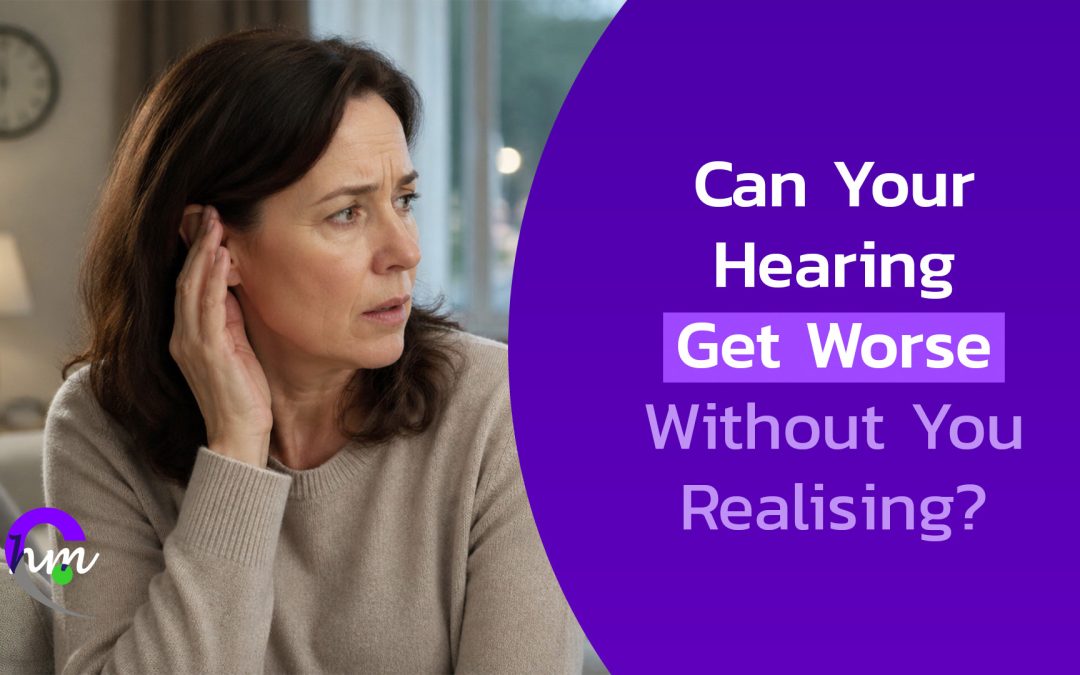
Yes, your hearing can gradually decline without you noticing, especially when exposed to loud noise over time. This often happens because the brain adapts to small changes, making it feel normal. Understanding the types of hearing loss and how they develop can help you recognise early signs before they become more noticeable. A hearing test is the most reliable way to identify these changes early.
Many people are surprised to learn just how subtle hearing changes can be.
Why Hearing Loss Often Goes Unnoticed
Hearing loss rarely happens overnight. Instead, it usually develops slowly, which is why many people don’t realise it’s happening.
Your brain plays a big role in this. As your hearing changes, your brain begins to:
- Fill in missing sounds
- Rely on context to understand speech
- Adjust to reduced clarity
This adaptation can make hearing loss feel “normal”, even when your ability to hear clearly has declined.
This is particularly common with high frequency hearing loss, where softer speech sounds like “s”, “f”, and “th” become harder to hear.
Understanding the Types of Hearing Loss
There are different types of hearing loss, and each develops in its own way. Understanding these can help explain why hearing may get worse without obvious signs.
Sensorineural Hearing Loss
This is the most common type and is usually caused by damage to the inner ear or auditory nerve. It often develops gradually due to ageing or long-term noise exposure.
Conductive Hearing Loss
This occurs when sound cannot pass efficiently through the outer or middle ear, often due to blockages or infections.
Hidden Hearing Loss
This form of hearing loss can be harder to detect. With hidden hearing loss, you may still hear sounds, but clarity is reduced, making conversations more difficult especially in noisy environments.
Each of these types of hearing loss can progress over time, often without obvious warning signs.
Can Your Ears Get Used to Loud Noise?
Many people believe their ears “get used to” loud environments, but this isn’t actually what’s happening.
Instead, repeated exposure to loud noise can cause gradual damage to the inner ear. Over time, this damage can reduce your ability to hear certain sounds clearly.
Hearing loss often develops gradually, particularly with repeated exposure to loud noise, which can damage the inner ear over time. This article explains how noise-induced hearing loss develops in more detail: Noise-Induced Hearing Loss
This is why environments like:
- Concerts
- Construction sites
- Loud workplaces
…can contribute to long-term hearing changes if proper hearing protection is not used.
Why You Might Not Notice the Changes
Because hearing loss develops slowly, it often goes unnoticed until it starts to affect daily life.
You might:
- Feel like people are mumbling
- Struggle in noisy environments
- Ask others to repeat themselves more often
- Turn the volume up slightly without thinking
These changes are often subtle at first, which is why many people delay getting their hearing checked.
The Role of Noise Exposure
Long-term exposure to loud sounds is one of the most common causes of gradual hearing loss.
This includes:
- Work environments linked to industrial hearing loss
- Loud music or events
- Frequent headphone use at high volume
Without proper hearing protection, this exposure can lead to permanent damage over time.
Can You Improve Your Hearing?
This is a common question. In most cases, hearing loss caused by damage to the inner ear cannot be reversed.
However, there are ways to improve how you hear and communicate, including:
- Early detection
- Professional guidance
- Hearing support options if needed
The earlier changes are identified, the easier they are to manage.
When Should You Get a Hearing Test?
Because hearing loss can develop without obvious symptoms, regular hearing checks are important.
You should consider a hearing test if you:
- Notice changes in speech clarity
- Struggle in noisy environments
- Experience frequent ringing in your ears
- Have been exposed to loud noise regularly
A hearing test can identify early changes and help you understand your hearing health more clearly.
How Hearing Matters Can Help
At Hearing Matters, experienced audiologists provide comprehensive hearing assessments to help identify even subtle changes in your hearing.
A professional evaluation can:
- Detect early signs of hearing loss
- Explain the specific types of hearing loss affecting you
- Provide personalised recommendations
If needed, they can guide you through options to support your hearing and improve everyday communication.
Take the First Step Toward Better Hearing
If you’re unsure whether your hearing has changed, you’re not alone, many people don’t realise until it starts to impact their daily life.
Hearing Matters offers free hearing aid evaluations across South Australia, giving you the opportunity to better understand your hearing and explore your options in a supportive, no-pressure environment.
👉 Book your hearing test today at Hearing Matters
Taking that first step can help you stay confident, connected, and in control of your hearing health.