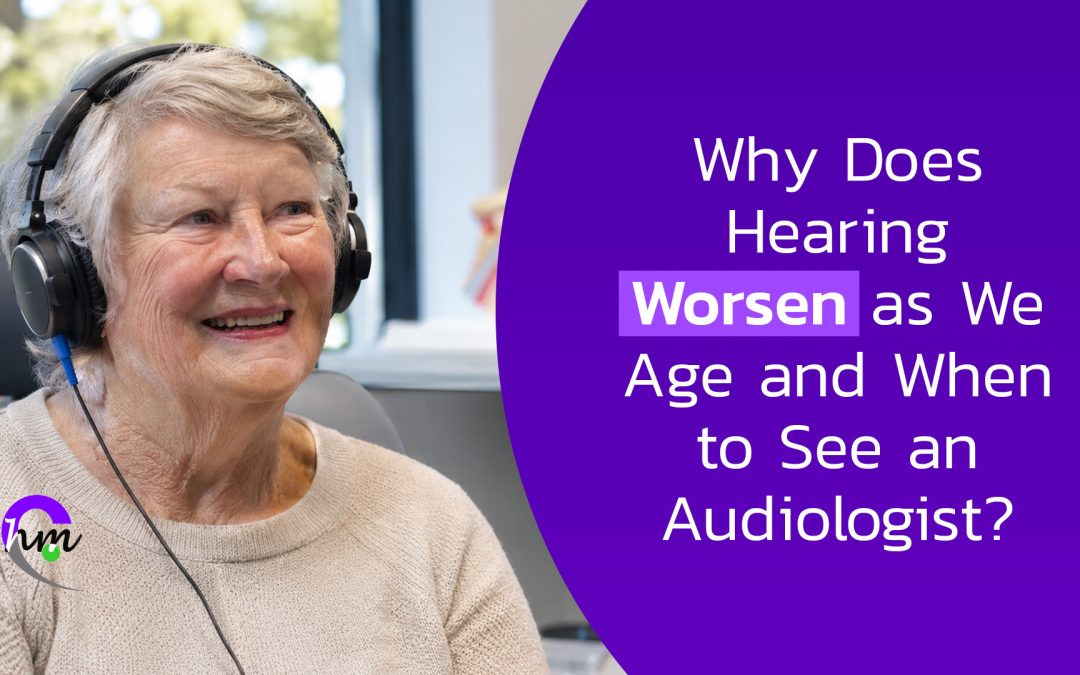
Age-related hearing loss is one of the most common conditions in older Australians, and one of the most under-addressed. For most people it begins in their 50s and becomes noticeably disruptive through their 60s and 70s.
If you are in South Australia and notice a drop in your hearing or it’s time for a check-up, book in with us for a hearing test and we can see what is happening and get you the help you need.
What Happens to Our Hearing as We Age?
The inner ear contains thousands of tiny hair cells that convert sound into signals the brain can read. Over time, those cells wear down from noise exposure, illness, and age. They do not regenerate. Once lost, they are gone.
This is what drives age-related hearing loss, clinically known as presbycusis. High-frequency sounds go first, which is why the most common early complaint is not “I can’t hear” but “I can hear people talking, I just can’t make out what they’re saying.” Speech in noisy environments becomes particularly hard to follow.
When to See an Audiologist about your hearing
The signs below are worth taking seriously, especially if more than one applies:
- Struggling to follow conversation in background noise
- Frequently asking people to repeat themselves
- Phone calls harder to follow than face-to-face conversation
- TV volume higher than others in the household need it
- Mishearing words rather than simply not hearing them
- Feeling fatigued after conversations that require concentration
Untreated age-related hearing loss has well-documented links to social withdrawal and cognitive decline.The longer it goes unaddressed, the harder it becomes to manage.
How Does an Audiologist Help?
Can age-related hearing loss be reversed? In most cases, no. The underlying hair cell damage is permanent. But its impact on your daily life is very much manageable.
A hearing assessment maps exactly what you are and are not hearing across different frequencies. From there, your audiologist can recommend hearing aids tailored to your specific pattern of loss, rehabilitation support, or both. Modern hearing aids amplify the frequencies you are missing rather than making everything louder. They are small and discreet.
How to prevent hearing loss in old age entirely is not always possible, but acting early gives the brain the best chance to adapt and get the most benefit from treatment. Waiting makes that harder.
What to Do Next about your hearing
If any of the signs above sound familiar, a hearing assessment is the right next step. It is non-invasive, takes around an hour, and gives you a clear picture of where things stand. Call Hearing Matters on 1300 731 710 or book an appointment online.