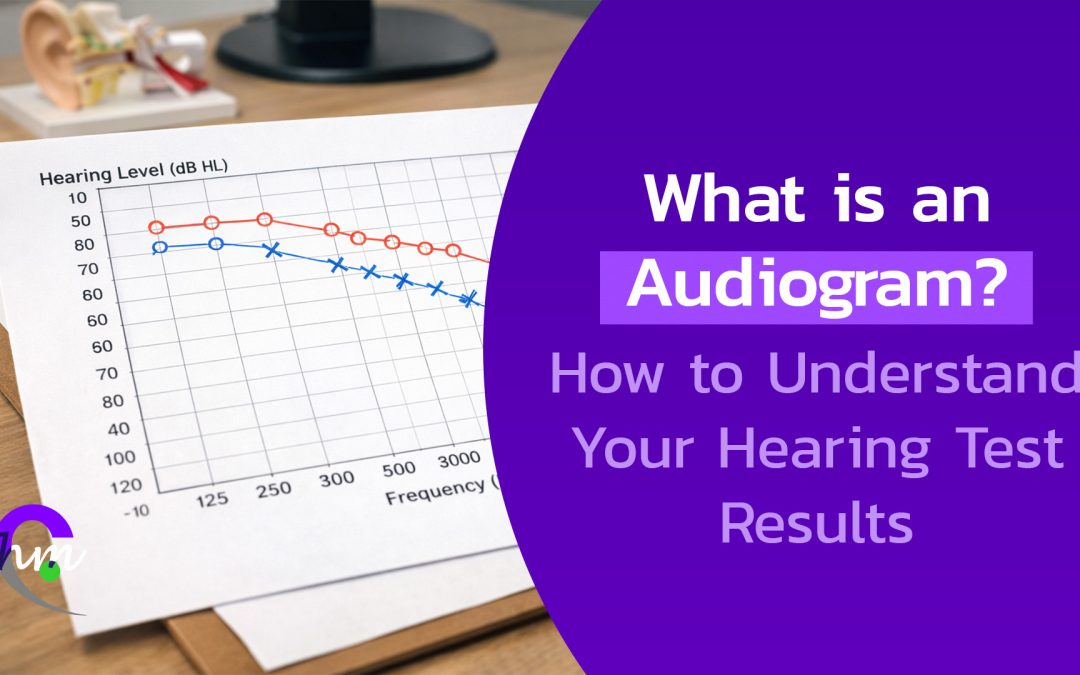
If you’ve recently had a hearing loss test, you may be wondering: what is an audiogram and what do the results actually mean? An audiogram is a chart that shows how well you hear different sounds and frequencies. It maps your hearing ability across pitches and volumes, helping an audiologist identify the type and severity of hearing loss. Understanding your audiogram can help you make informed decisions about treatment options, including whether hearing aids may help.
In this guide, we’ll break down exactly “what is an audiogram”, how to read it, and what your results might mean for your hearing health.
What Is an Audiogram and What Does It Show?
An audiogram is the visual result of a hearing loss test. During the test, you wear headphones and respond to tones played at different frequencies (pitches) and volumes (decibels). The results are plotted on a graph.
The audiogram shows:
- Frequency (Hz) across the top – from low-pitched sounds to high-pitched sounds
- Intensity (dB) down the side – from soft to loud sounds
- Symbols marking what you could and couldn’t hear
When people search “what is an audiogram?”, they’re often trying to understand why their chart looks the way it does, especially if they’ve been told they may have hearing loss.
How to Read an Audiogram
If you’re asking how to read an audiogram, start by looking at where the marks fall on the chart.
- Sounds at the top of the graph are softer
- Sounds further down the graph are louder
- The further right you go, the higher the pitch
If your marks sit lower on the graph, it means you need louder sounds to hear clearly. For a more detailed visual explanation of audiograms and their components, you can read this guide from Hear & Say on What Is An Audiogram? This expands on how the chart is structured, which we won’t go into in full technical detail here.
Audiogram Interpretation: What Do the Results Mean?
Audiogram interpretation involves identifying patterns in your results. These patterns help determine:
- The degree of hearing loss (mild, moderate, severe, profound)
- The configuration of hearing loss (flat, sloping, rising)
- The type of hearing loss
One of the most common patterns is high frequency hearing loss, where higher-pitched sounds are harder to hear. This often affects speech clarity, especially consonants like “s” and “th”.
Types of Hearing Loss on an Audiogram
Your audiogram can help distinguish between different types of hearing loss, including:
Sensorineural Hearing Loss: This is the most common type and occurs when there is damage to the inner ear or auditory nerve. It is usually permanent and often treated with hearing aids.
Conductive Hearing Loss: This occurs when sound cannot pass effectively through the outer or middle ear. Many people search for sensorineural hearing loss versus conductive hearing loss after seeing those terms in their results. The audiogram pattern helps your audiologist determine which type you have. In some cases, your results may show audiogram conductive hearing loss, where there is a noticeable gap between air and bone conduction results.
Why Understanding Your Audiogram Matters
It’s normal to leave an appointment feeling overwhelmed. The chart can look confusing, and medical terms may not immediately make sense.
Understanding what is an audiogram helps you:
- Feel more confident about your diagnosis
- Understand why certain sounds are difficult
- Know whether hearing aids are recommended
- Ask informed questions about treatment options
An audiogram is not just a chart, it’s a roadmap for your hearing health.
When Hearing Aids May Be Recommended
If your audiogram shows permanent hearing loss, particularly sensorineural loss, hearing aids are often the most effective treatment option.
Modern hearing aids are programmed according to your specific audiogram results. That means they are tailored to amplify only the frequencies you struggle with, rather than making everything louder.
At Hearing Matters, we offer a free hearing aid evaluation across South Australia. This allows you to:
- Discuss your audiogram results in detail
- Explore whether hearing aids are suitable for your type of hearing loss
- Trial a device in your everyday environment
- Understand your options without pressure
This step can be especially helpful if your audiogram shows high frequency hearing loss or another pattern that impacts speech clarity.
What If Your Results Seem Mild?
Even mild hearing loss shown on an audiogram can affect communication, particularly in noisy environments. Many people delay action because they feel their hearing is “not that bad”. However, early support often leads to better long-term outcomes.
If you’re still unsure after reviewing your results, speaking with a qualified audiologist can provide clarity and reassurance.
Take the Next Step with Hearing Matters
If you’ve recently had a hearing loss test and are still wondering “what is an audiogram?” or what your results mean for you, you don’t have to figure it out alone.
Hearing Matters has clinics across South Australia and provides personalised, professional guidance based on your individual audiogram results. Book your free hearing aid evaluation today at Hearing Matters and take the next step toward clearer hearing and greater confidence.